
· OWON Technology · Thermostats · 4 min read
What These 24VAC Thermostats Do Not Support
The fastest way to rule a system out: line voltage, two-wire, fan coil, multi-speed fans, ERV and baseboard - and how to spot each before ordering.
Most compatibility pages list what works. This one lists what does not, because that is the faster check: if your system appears below, no model in this range will run it, and no adapter changes that.
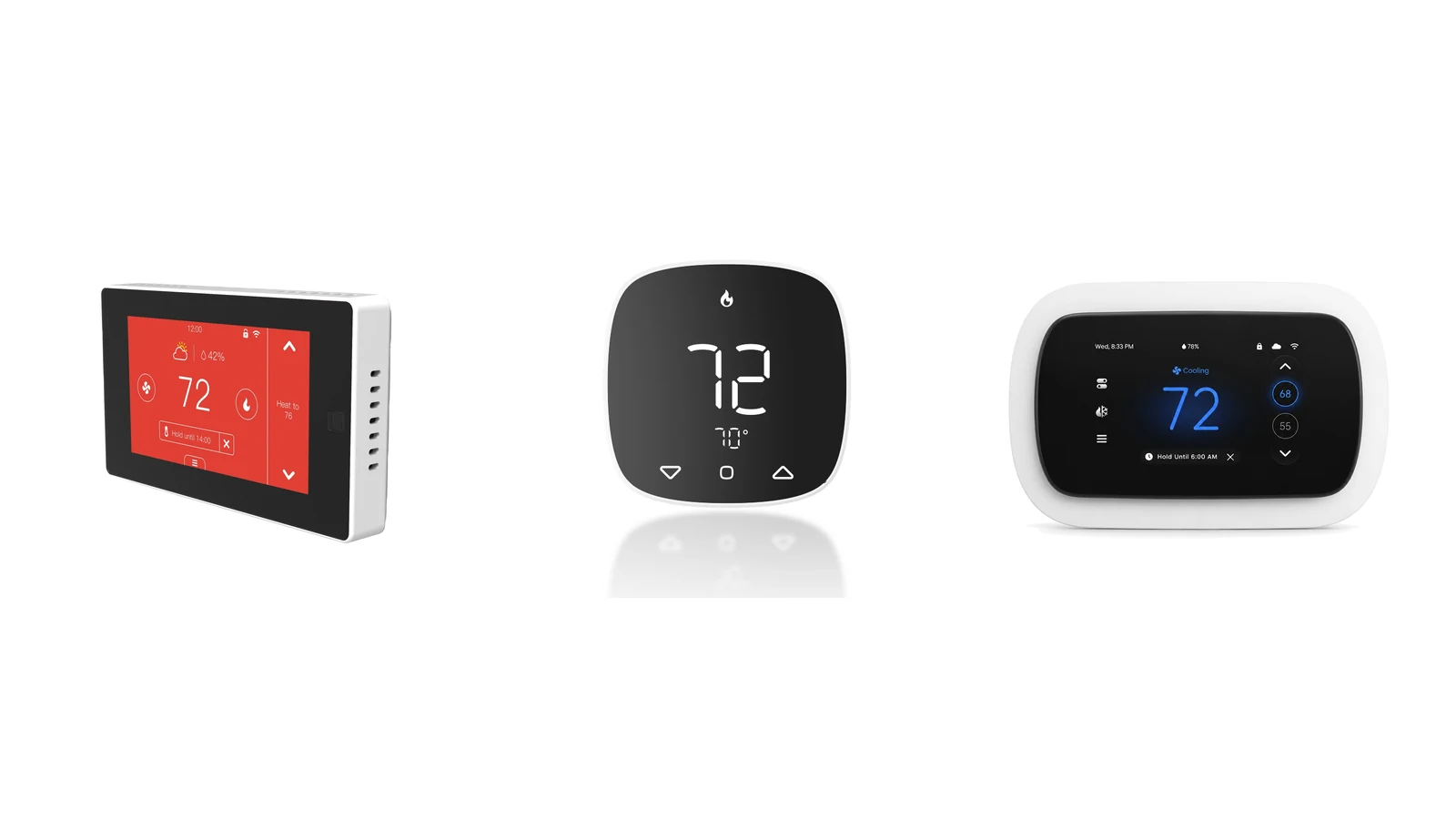
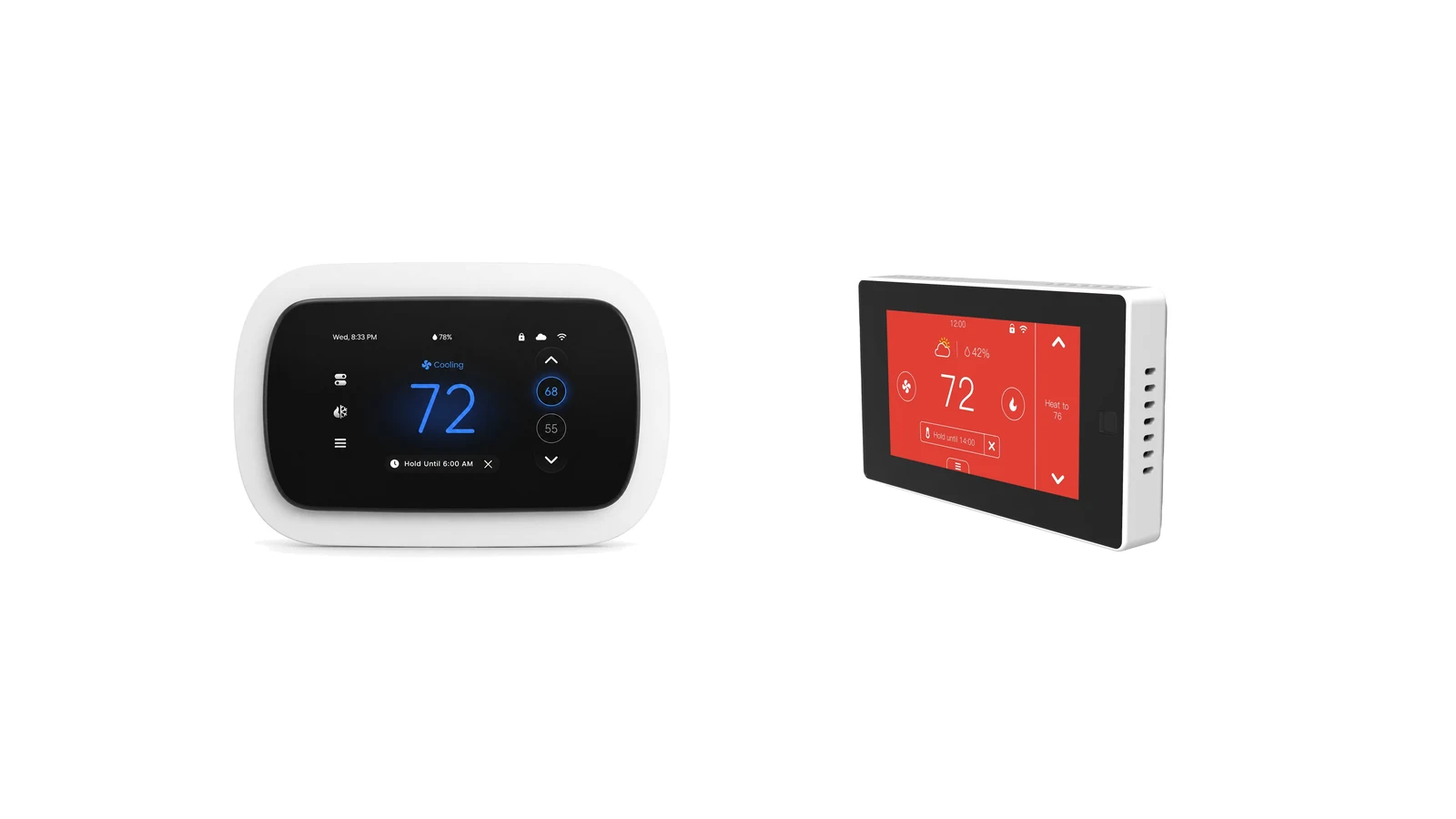
All four models - PCT513, PCT5231, PCT533 and PCT533C - share the same limits. They differ in sensors, humidity control and display, not in what they can switch.
The list
| System | Why it is out |
|---|---|
| Line voltage, 120V or 240V | The thermostat switches 24VAC only; it cannot switch mains |
| Thick wires joined with wire nuts | Same case as above - a sign of line voltage, not a 24VAC control circuit |
| Two-wire systems | No fan control, no second stage, nothing to power the thermostat continuously |
| Fan coil units | Valve outputs and often a three-speed fan; a different product family |
| Multi-speed fans, G2 / G3 | These models provide a single fan output |
| ERV / HRV / VRV | Need dedicated controllers for damper and valve networks |
| Baseboard heaters | Electric resistance at line voltage |
| 3-stage conventional heating | Two heating stages plus two auxiliary stages are supported, not three compressor stages |
Recognising each one
Line voltage. Flip the old thermostat over. If it says 120V, 240V, L1 or L2, it is switching the mains supply. The wires will be thick and often joined with wire nuts rather than landed on screw terminals. Stop here - this is also the only entry on the list that is a safety issue rather than a compatibility one.
Two-wire systems. Only two conductors at the wall, usually R and W. Some very old systems used a single conductor plus a mechanical anticipator. There is no fan wire, no second stage, and nothing that could be reconfigured into a permanent supply.
Fan coil units. Common in hotels and apartment blocks: a coil fed by hot and chilled water, with a valve actuator for each, plus a three-speed fan. The thermostat would need valve outputs and three fan speeds. Our hotel range covers this case with different products.
Multi-speed fans. Look for G2 or G3 next to G. These thermostats switch one fan speed; a second and third speed need separate outputs.
ERV, HRV and VRV. These move air or refrigerant between zones through dampers and valves, with their own controllers. A thermostat that closes R to W, Y and G has no channel to them.
Baseboard heaters. Electric resistance heating at line voltage, usually with a built-in or wall-mounted line-voltage thermostat. Not a 24VAC control circuit at all.
Three-stage conventional heating. The models here support 2H/2C conventional and 4H/2C heat pump - two compressor stages plus two auxiliary or emergency stages. A third compressor stage has no terminal.
What is supported, for contrast
| System | Support |
|---|---|
| Conventional gas, electric, oil, hot water | 2 heating stages, 2 cooling stages |
| Heat pump | 2 compressor heating stages + 2 auxiliary/emergency, 2 cooling stages (4H/2C) |
| Dual fuel / hybrid heat | Supported on all four models |
| Humidity equipment | Only on the PCT533, via ACC1/ACC2 |
The full comparison of the four models is in the side-by-side article.
The two-minute check
- Read the back of the old thermostat. 120V, 240V, L1 or L2 ends the conversation.
- Look at the wire ends. Thick wires with wire nuts ends it too.
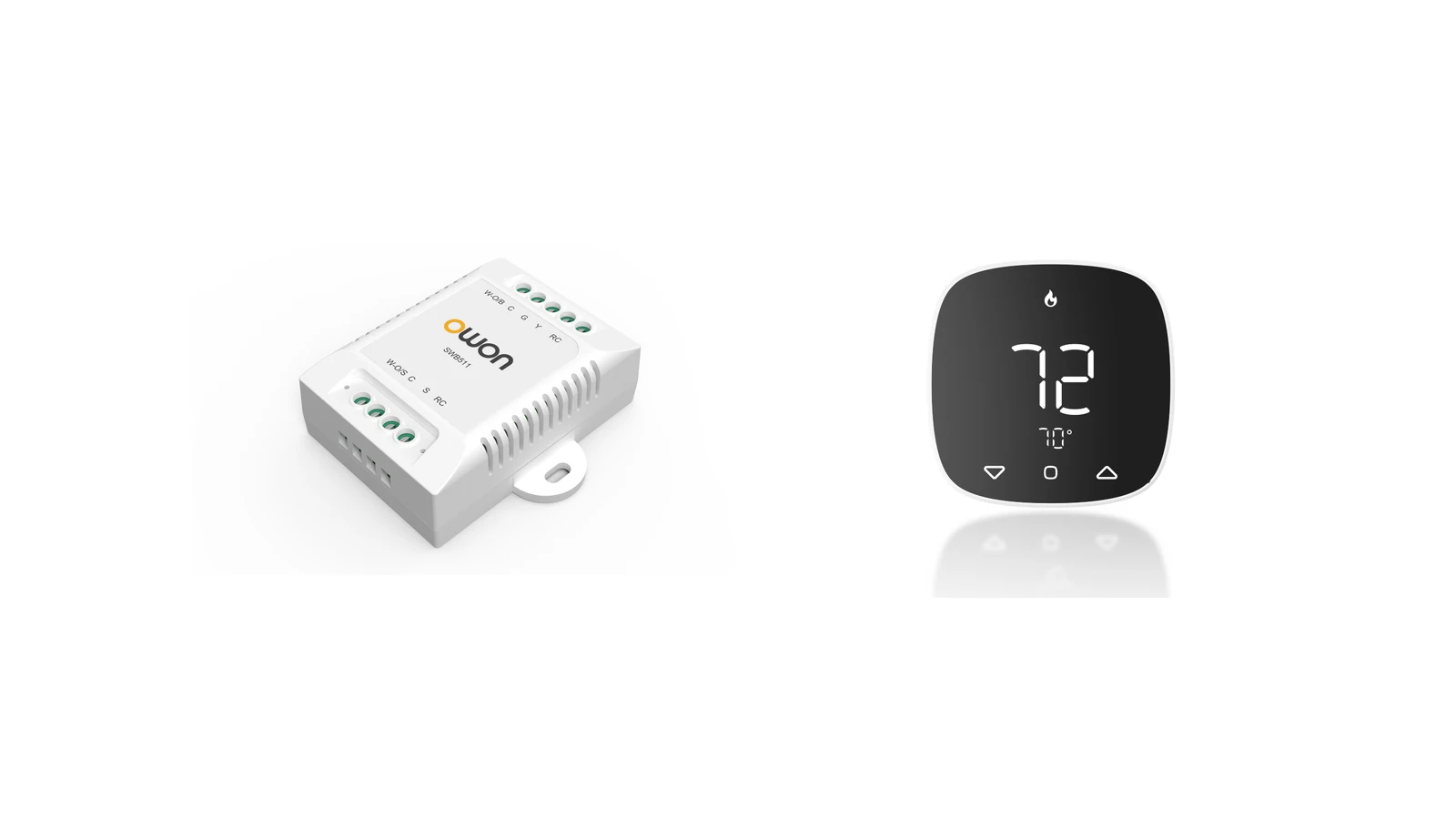
- Read the terminal letters. R, Rc, Rh, W, W1, W2, Y, Y1, Y2, G, O/B, C - those are the ones this range speaks.
- Count the conductors. Two is too few; three is the minimum, and only with an adapter.
If all four steps pass, the question becomes which model, not whether. The compatibility check walks the same four steps and returns the models that fit, including whether the C-Wire Adapter is needed.
If your system is on the list
We would rather lose the order than sell a thermostat that cannot switch your system. If you are not sure which category you are in, send a photo of the terminal block and the back of the old thermostat to our engineers. If it turns out we do not make a unit for your system, we will say so.
The full 24VAC range, with the systems each model handles, is on the 24VAC thermostat page. Wiring diagrams are in the documentation library.
Frequently Asked Questions
Can these thermostats control a two-wire system?
No. A two-wire system has only R and W, or R and a single switched conductor. There is no fan control and no second stage, and there is nothing to power the thermostat continuously unless an adapter can be fed from those two wires - which is not a supported configuration.
What does line voltage mean and why is it incompatible?
Line voltage thermostats switch the mains supply directly, typically 120V or 240V for baseboard heaters and some fan coils. They are marked L1 and L2, or the wires are thick and joined with wire nuts. These devices work at 24VAC and cannot switch mains voltage.
Can it control a fan coil unit?
No. Fan coil units use valve outputs and often a three-speed fan, neither of which is wired to the terminals these thermostats provide. They are a separate product family.
What about ERV, HRV and VRV systems?
Not supported. Those systems need dedicated controllers for their damper or valve networks. A thermostat that switches R to W, Y and G does not speak to them.
Is a heat pump with three stages supported?
Not in this range. The models here support two compressor heating stages plus two auxiliary or emergency stages, written 4H/2C, and two cooling stages. A third compressor stage is not wired.
What should I check before ordering?
Photograph the old thermostat terminal block and read the markings on the back of the old thermostat. If it says 120V, 240V, L1 or L2, stop. If the wires are thick and joined with wire nuts, stop. Otherwise the terminal letters are usually enough for us to confirm the model.