


PC4713-W-485
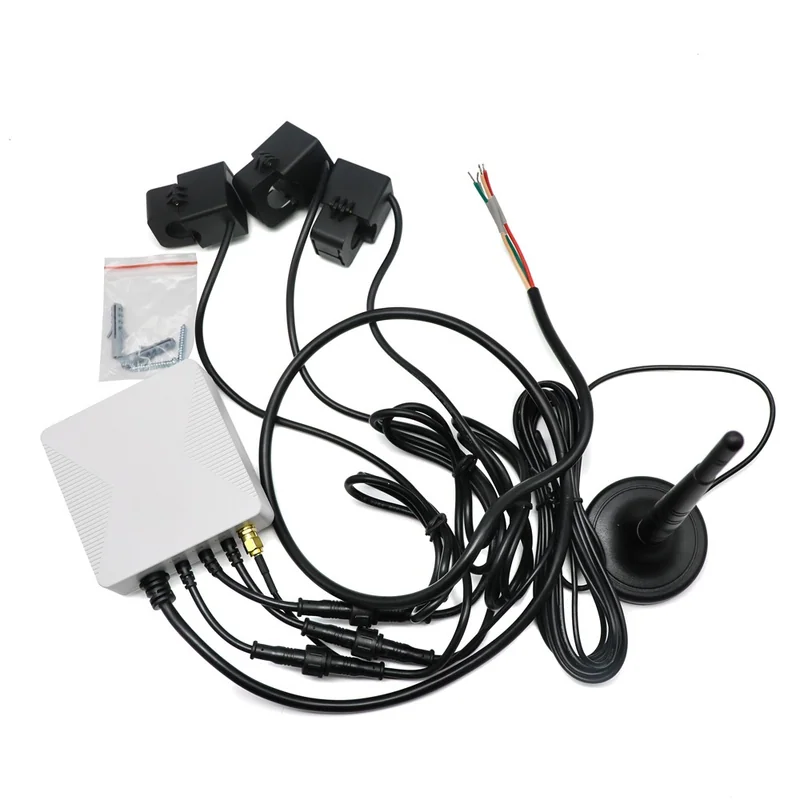
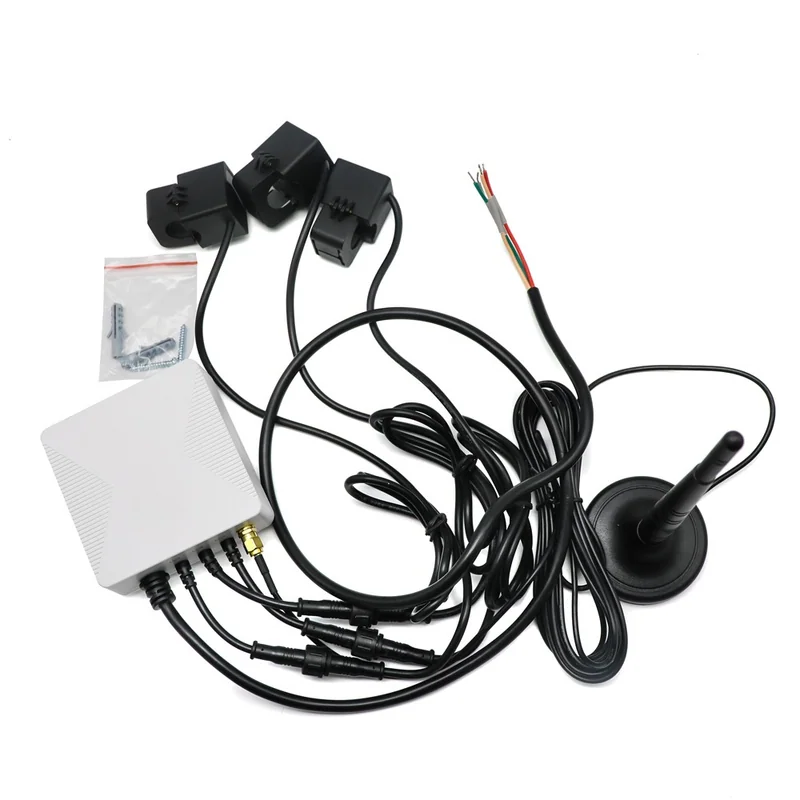
Three-Phase WiFi + RS485 Smart Energy Meter
For BMS and SCADA racks: 3-phase meter with RS485 Modbus RTU plus HTTP/MQTT over WiFi, 50 ms refresh, DIN rail, 80-750 A CTs.
Overview
PC4713-W-485 is the OWON three-phase meter that speaks both a serial bus and the network: RS485 carrying Modbus RTU with a maximum 50 ms response for the control side, and Wi-Fi carrying HTTP, MQTT and Modbus TCP for platform reporting. The two paths are independent, so a local control loop and a cloud feed run from the same instrument.
It is an Open API model, so nothing passes through a vendor cloud and no account is created; the meter is configured from its own browser page. It covers three-phase four-wire, split-phase and single-phase supplies at 90–277 Vac per phase, with bidirectional measurement and three CTs from 80 A to 750 A.
Where the PC4713-W-485 Sits in the Range
RS485 is what separates this model from the PC4713-W; in every other respect — platform, measurement, configuration, CT range — the two are the same meter. Specify the 485 version when a PLC, BMS or SCADA system polls a serial bus, or when a cable is already at the board; the Wi-Fi-only PC4713-W is right when the bus is not part of the design.
Within the wider PC4713 family this is one of the two Open API models. Where the Tuya App is wanted instead of a self-hosted platform, the equivalents are the PC4713-W-E-TY and PC4713-W-E-TY/R. A three-phase three-wire or delta service sits outside the Open API hardware altogether and needs the Tuya-series PC4713-W-E-TY/3W.
PC4713-W-485 Platform and Integration Notes
Open-type CTs, no rewiring. Up to three split-core CTs from 80 A to 750 A clip around the existing conductors: no circuit is cut and no supply is interrupted.
Class B (1%) accuracy, with its bands stated. Voltage ±1%; current ±1% at rated current and ±2% at low current, banded per CT rating — on 300 A and above, ±1% from 6 A upwards, ±2% between 2 A and 6 A, and ±5% below 2 A.
Two measured response times, not one. RS485 answers in a maximum of 50 ms; the Wi-Fi path responds in around 200 ms. A control loop that needs the faster figure belongs on the serial bus.
Settings over the network, either path. Reporting frequency, CT specification, OTA firmware update, data erase and remote reboot are reachable over Wi-Fi or over the RS485 bus, so a fleet can be reconfigured remotely even where only the serial link is used.
Home Assistant integration, in addition to direct polling over Modbus RTU, Modbus TCP, MQTT or HTTP.
PC4713-W-485 Limits and What to Specify Instead
- Three-phase three-wire and delta — not supported by the Open API hardware. Specify the Tuya-series PC4713-W-E-TY/3W.
- Relay output — no Open API model carries a dry contact; load switching is a Tuya-series option (PC4713-W-TY/R, PC4713-W-E-TY/R).
- The Tuya App, Tuya automation and Tuya Cloud history — this model reports to your infrastructure instead.
Specifications
| Accuracy | ±1% (Voltmeters) |
|---|---|
| Ammeter Accuracy | 80A CT: ±1% (1-80A), ±2% (0-1A); 120A CT: ±1% (2-120A), ±2% (0-2A); 200A CT: ±1% (2-200A), ±2% (0-2A); 300A CT: ±1% (6-300A), ±2% (2-6A), ±5% (0-2A); 500A CT: ±1% (6-500A), ±2% (2-6A), ±5% (0-2A); 750A CT: ±1% (6-750A), ±2% (2-6A), ±5% (0-2A) |
| Voltage | 90~277 Vac 50/60Hz (RMS per phase) |
| Current | 80A~750A (CT dependent) |
| Frequency | 50/60Hz |
| Power Supply | <2W |
| Protocol | WiFi 802.11 b/g/n @ 2.4GHz (HTTP / MQTT / Modbus TCP) + RS485 (Modbus RTU) |
| Wi-Fi | 802.11 b/g/n @ 2.4GHz — HTTP / MQTT / Modbus TCP |
| RS485 | Modbus RTU |
| Data Refresh | 50ms |
| Response Time | 50ms (RS485); 200ms (WiFi) |
| Supported Systems | Single-Phase, Split-Phase, Three-Phase (3P3W & Delta not supported) |
| Mounting | 35mm DIN rail mounting |
| Dimensions | 19(W) x 69(D) x 90(H) mm |
| Operating Temp | -20℃ to +55℃ (≤90% non-condensing) |
| Measured Parameters | Voltage, Current, Power Factor, Frequency, Active Power, Reactive Power, Apparent Power; Energy Usage / Solar Production |
| Clamp Inner Dimension | 80A: Ø10mm; 120A (default): Ø16mm; 200A: Ø20mm; 300A: Ø24mm; 500A: Ø36mm; 750A: Ø51mm |
| Certification | CE |
| Place of Origin | China |
| Brand | OWON |
Key Benefits
RS485 Modbus RTU and Wi-Fi Together
A wired bus for PLC, BMS and SCADA loops answering in a maximum of 50 ms, with Wi-Fi carrying HTTP, MQTT and Modbus TCP on the same meter.
Four-Quadrant Measurement and Demand
Active, reactive and apparent power in all four quadrants with switchable RMS / PQS, plus current demand and maximum demand.
Direct to Your Cloud, No Vendor Cloud
Reports to your own cloud or local server with no third-party cloud in the path and no account to create.
Configured in a Browser, No App
The meter serves its own configuration page over its hotspot: readings and settings with nothing to install.
Ideal For
Common deployment scenarios where Three-Phase WiFi + RS485 Smart Energy Meter delivers the most value.
Industrial Power Monitoring
RS485 Modbus RTU with 50ms refresh suits industrial SCADA and PLC integration.
EMS / BMS Integration
Modbus RTU/TCP, MQTT and HTTP enable seamless EMS, BMS and automation platform integration.
Solar & Energy Storage
Real-time import/export data for export limitation, zero-export and anti-backflow control.
Commercial & Utility Submetering
CT options 80A-750A cover commercial buildings and utility sub-metering projects.
Direct-to-Cloud Deployments
Report data straight to your own cloud server without a third-party public cloud.
Local-Read Installations
No App needed — connect to the device hotspot and view real-time data in a browser.
Frequently Asked Questions
What is an RS485 energy meter used for?
Which interfaces does the PC4713-W-485 provide?
Can PC4713 integrate with EMS and BMS platforms?
Is the PC4713-W-485 suitable for anti-backflow applications?
What electrical systems does the PC4713-W-485 support?
How fast can it report?
Which CT rating for a three-phase feeder?
Can the meters be pre-configured to our broker before shipping?
What is the difference between a Modbus energy meter and an RS485 energy meter?
Does it support TLS, and is the authentication mutual?
How do I load and rotate certificates, and is there a size limit?
What should I know before commissioning an encrypted MQTT link?
PC4713 Series — choose the right variant
| PC4713-W | WiFi + open protocol (HTTP / MQTT / Modbus TCP) |
|---|---|
| PC4713-W-TY | WiFi + Tuya Cloud |
| PC4713-W-TY/R | + dry-contact relay (remote on/off) |
| PC4713-W-E-TY | + wired Ethernet 10/100 |
| PC4713-W-E-TY/R | + Ethernet + dry-contact relay |
| PC4713-W-E-TY/3W | 3-phase 3-wire (3P3W) supplies |
| PC4713-W-485 — this page | + RS485 Modbus RTU (BMS / SCADA) |
Not sure which variant fits your project? See the PC471 selection guide.
Related Products
Interested in Three-Phase WiFi + RS485 Smart Energy Meter?
Download the datasheet or request pricing — our team will respond within 24 hours.
Our engineers usually reply within one business day.